Experimental Drawing
A 4-week course in unconventional mark-making ~ begins 16 November 2026
Many of us stopped drawing around the time we started worrying whether we were ‘good at it’.
In the age of AI generated images, it can be tempting to abandon paper and pencil all together and let the computer do the work.
At some point, we forgot (or maybe we didn’t realize) that drawing is a way of making direct contact with the world. We can see things with our own eyes and create something with our bare hands. We can try something new and get started without knowing the outcome. We can make something unexpected and have fun doing it.
Drawing is a way of thinking, being, and playing.
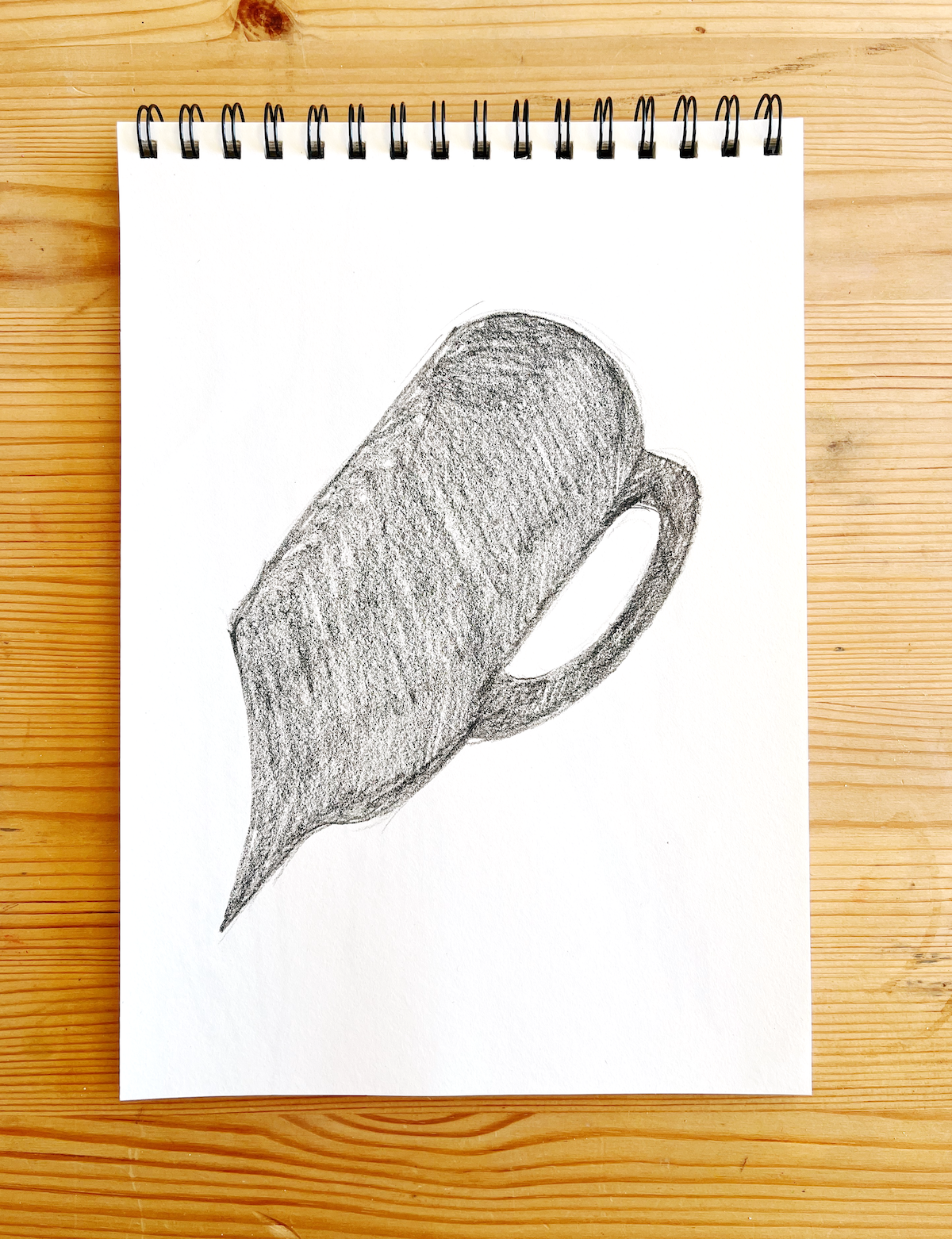
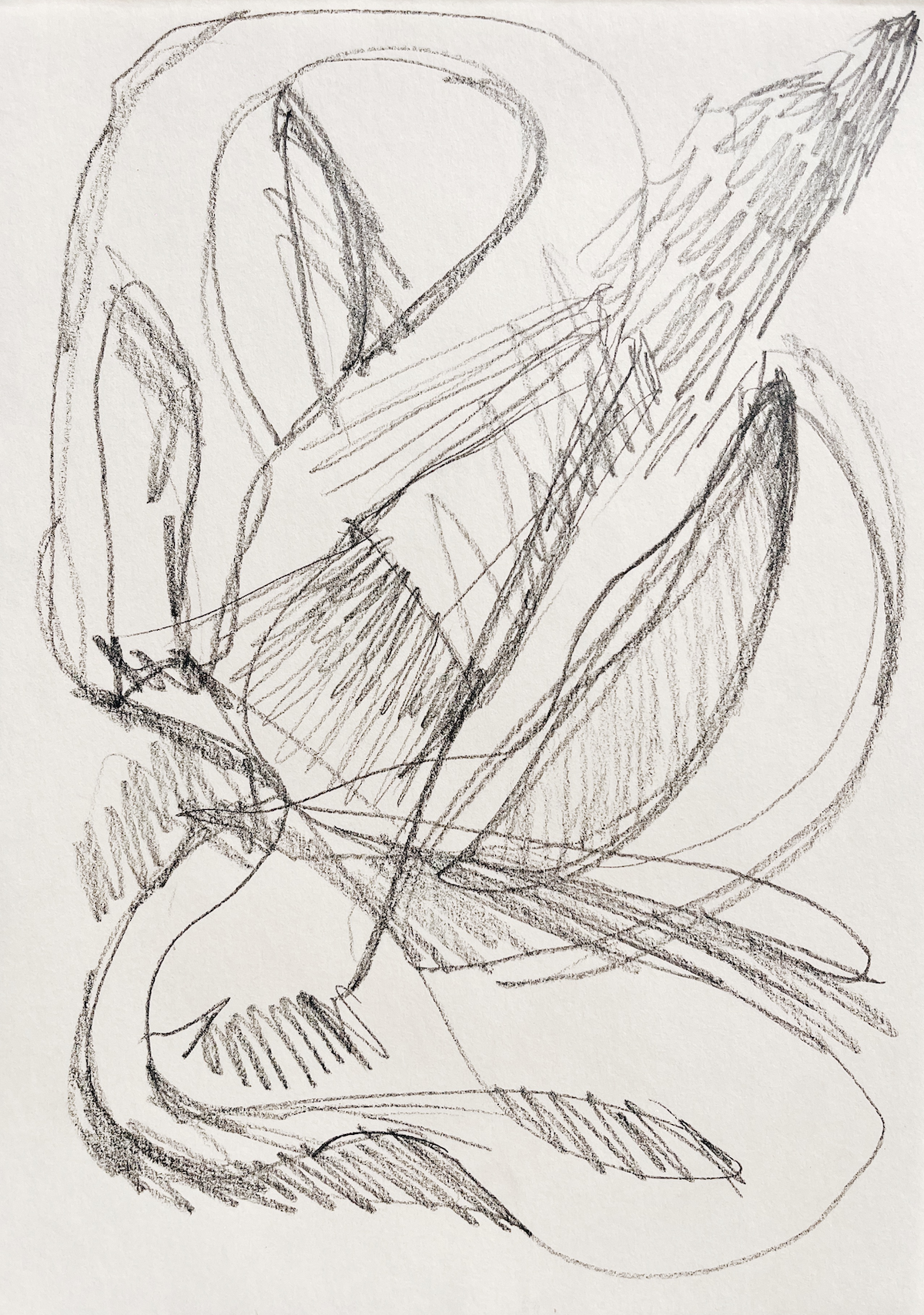
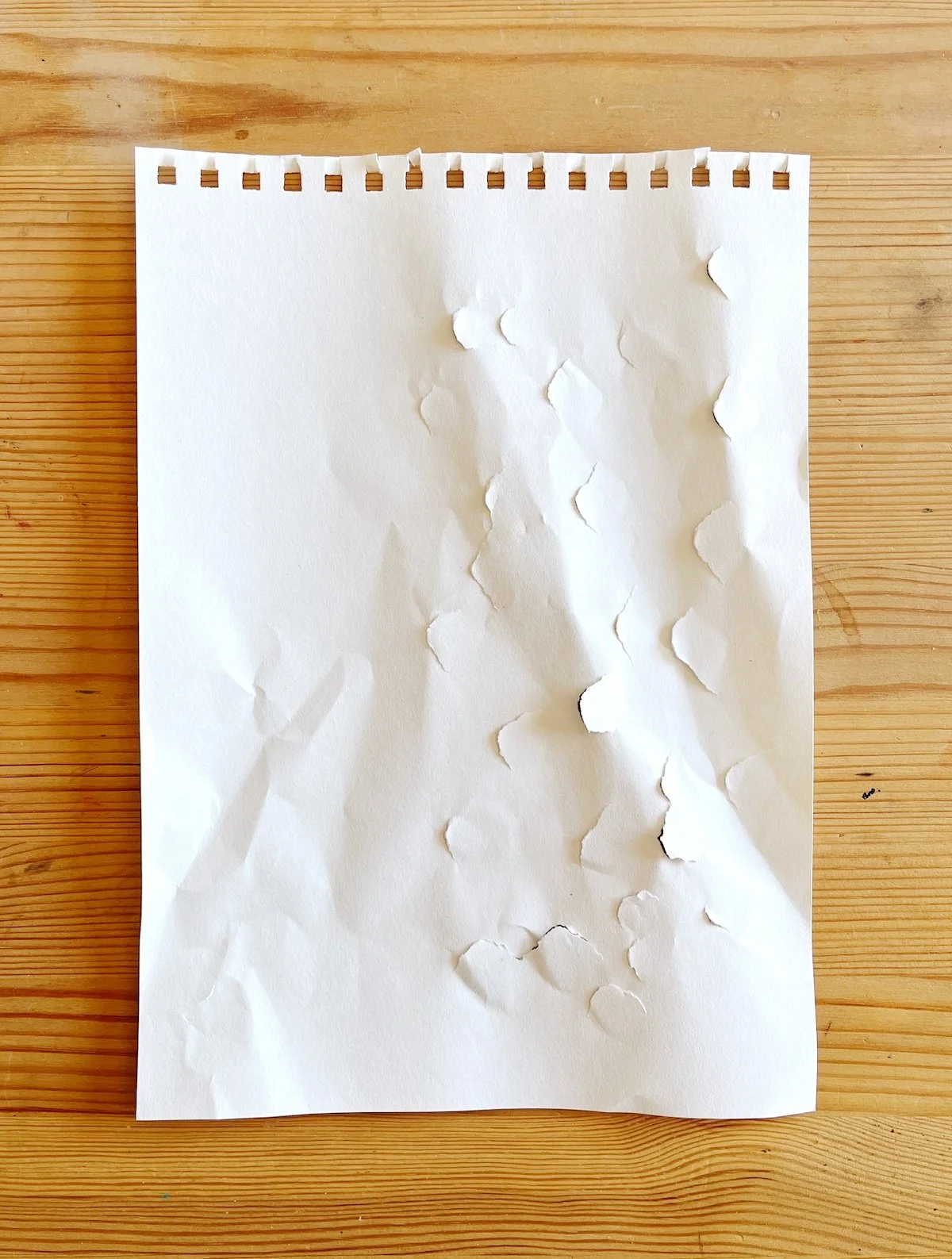
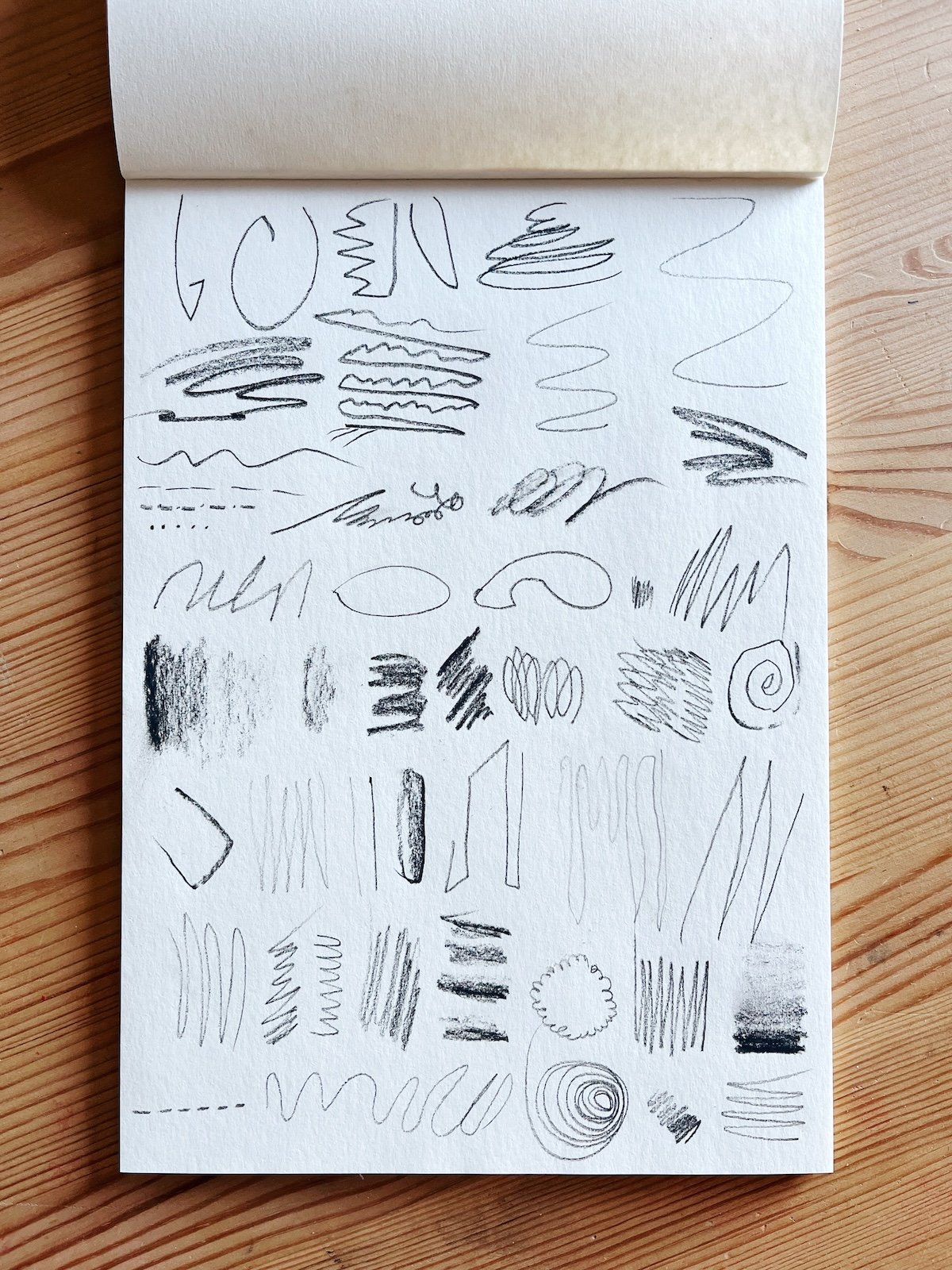
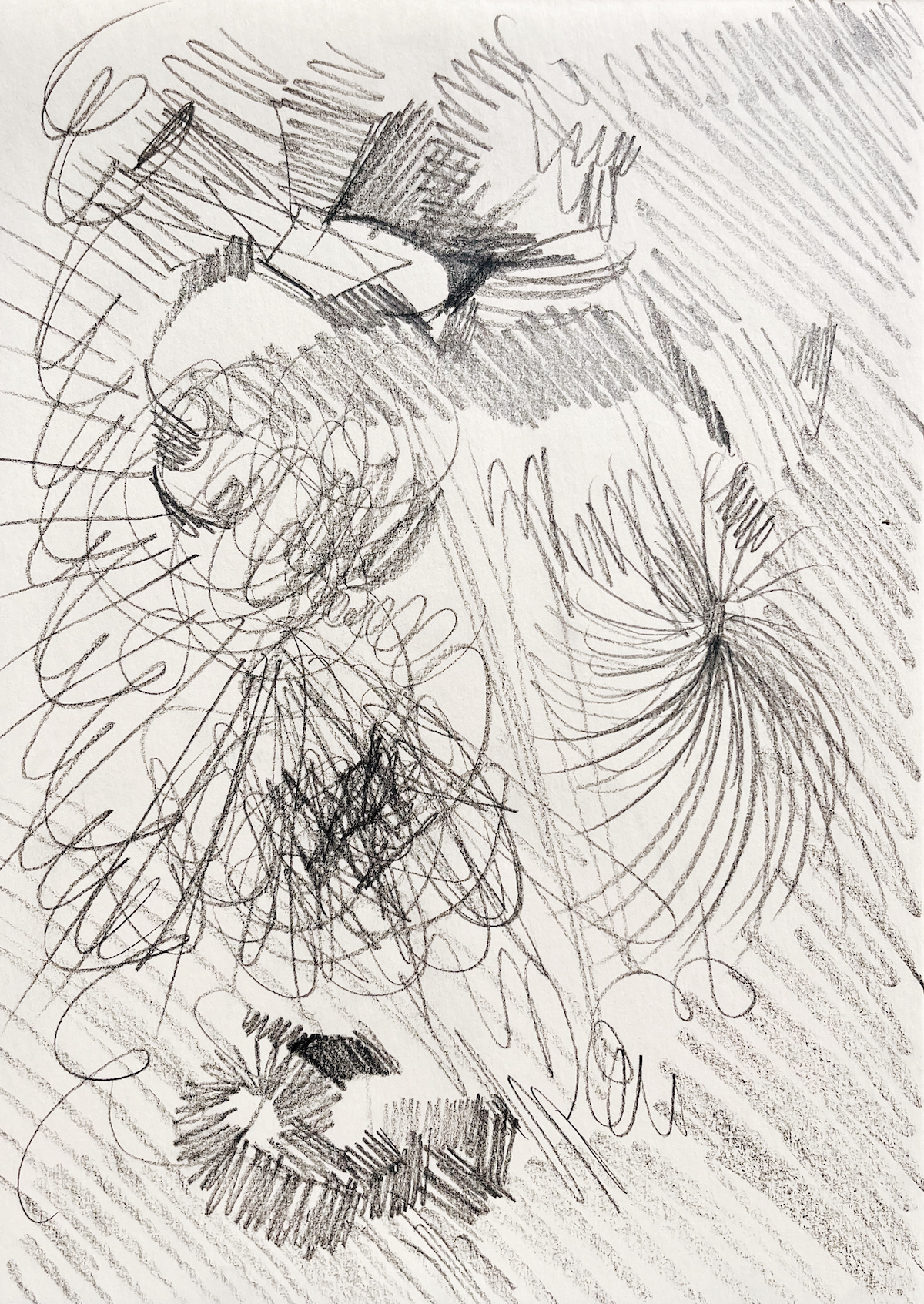
Experimental Drawing is a 4-week course exploring unconventional approaches to mark-making. It’s a space to be curious, imperfect, and alive.
Inside the Course
Be guided as you build a spontaneous relationship with the creative process. You’ll get:
🔹 28 daily drawing prompts by email and in the course portal to play with over the 4 weeks and beyond
🔹 4 weekly creative lessons to guide your explorations
🔹 4 weekly reflections to help you slow down and celebrate your progress
🔹 4 art history lessons to deepen your knowledge and apply themes to your practice
🔹 Space to share and discuss your work with others in our WhatsApp community
🔹 A live call with a chance to discuss your work and get feedback
🔹 Access to Studio Hours, live multidisciplinary calls offering space for feedback and reflection on your work
By the end of the course, you’ll:
🔸 Start without knowing the outcome, and get comfortable working with uncertainty.
🔸 Let go of trying to draw something ‘correctly’, and instead let yourself explore the surprises that can show up when you get into a creative flow.
🔸 Stop asking permission to create something.
🔸 Develop a personal vocabulary of mark-making and create something unique.
All levels of experience are welcome: from those that say‘I can’t draw’ to practicing artists.
Begins on Tuesday, 16 November 2026
Who this is for
The course is a good fit if:
✅ You’re curious about a more spontaneous, less self-conscious creative practice
✅ You want to learn experimental drawing techniques for mark-making and go beyond strictly representational methods
✅ You’re rebuilding a creative life after years spent somewhere else: a career, a role, a version of yourself that didn’t leave much room for experimentation
✅ You used to make things, and you miss it!
When this isn’t right:
❌ You prefer to draw using a mostly representational approach
❌ You don’t like getting a little messy
Why this matters now
As AI image generation gets more sophisticated, I find myself pulled more deeply into drawing by hand. I enjoy drawing as way of engaging with life, with being a real person in the real world. This course is built on that same desire.
The case for drawing by hand:
Drawing words instead of writing them roughly doubles recall, engaging a combination of visual, motor, and semantic memory (Fernandes, Wammes and Meade, 2018)
45 minutes of creative activity measurably lowers stress markers (Kaimal, Ray and Muniz, 2016)
Regular drawing builds cognitive flexibility and divergent thinking (Wang et al., 2023)
Humans have been drawing for at least 73,000 years (Henshilwood et al., 2018)
What you’ll get
Receive 4 weeks of guidance in experimental mark-making ~ 28 exercises, 4 creative lessons, 4 art history lessons, and 4 reflections. Share work, get feedback, and discuss your creative process in the course chat within the Experimental Practice WhatsApp community.
Attend 1 live Zoom session providing a review and discussion of work. The call will be recorded for anyone who can’t attend. Participants must join live to have their work discussed.
Those enrolled in Experimental Drawing, Experimental Photography, and Experimental Writing also get access to Studio Hours, live multidisciplinary calls offering space for feedback and reflection on your work.
What you’ll need
✏️ You’ll receive a full list of materials, but the basics will do: a sketchbook, large sheets of paper, graphite pencils, an eraser, ink, brushes, watercolours, soft charcoal sticks, crayons and colored pencils.
✏️ No prior experience needed. Beginners and working artists are all welcome.
About Francesca
I’m Francesca, an artist, guide, and educator. My approach draws from my professional and personal study of the arts, psychotherapy, and altered states.
I teach drawing as a way of bringing what’s beneath the surface into a visible form, and as a way of seeing and relating directly to the world around you. I’ve been teaching and facilitating in the arts since I was a teenager, and I bring curiosity and encouragement into the studio.
Enroll
Experimental Drawing
£150
16 November to 13 December 2026
Experimental Practice Series
Also Join Experimental Photography
+£100 (Join now to save £50)
13 October to 9 November 2026
Registration for the course bundle closes in
FAQs
I am a beginner / have no drawing experience / can’t draw. Is this for me?
Yes. This course is appropriate for those with no to little drawing experience. It’s a perfect way to loosen up and get started.
I’m a skilled / trained / working artist. Is this for me?
Yes. This course is suitable for experienced artists. A few of the exercises may be familiar, while others will likely be new. Either way, you’ll have the chance to widen your visual vocabulary and experiment with new ways of mark-making.
How is the work reviewed?
The work is not formally assessed. You’ll have a chance to share it with other participants in the WhatsApp community and receive feedback from me on our live call. Anything we discuss is in the spirit of shared process rather than critique.
What if I’m nervous to share what I draw?
Sharing is encouraged, but optional. It’s up to you. If you choose to share, the space will be encouraging and supportive.
When is the live session?
We’ll meet on Zoom to review and share work. The session date will be announced soon. It is typically held on a Tuesday at 1pm NYC / 6pm UK / 7pm Madrid time.
What if I miss the live session?
The live session will be recorded. Participants must join live to have their work discussed.
How much time will I need?
Most daily exercises take 10 to 30 minutes, though a few invite you to go longer if you're enjoying the flow. There’s no minimum. The point is to show up daily, not to fill a set amount of time. Weekly reflections take another 10 to 15 minutes, and the live call is 60 to 90 minutes.
What materials do I need?
You’ll receive a full list of materials, but the basics will do: a sketchbook, large sheets of paper, graphite pencils, an eraser, ink, brushes, watercolours, soft charcoal sticks, crayons and colored pencils.
Is this art therapy?
No. This is a creative and educational course, not a therapy space. It’s taught by me in my capacity as an artist and educator.
Do you offer scholarships or reduced fee places?
No. The course is priced to be affordable. If it’s too much, it’s not the right time.
What is the refund policy?
The program is non-refundable. The full refund policy is here. If you have any questions, please contact me before joining.
Have a question not answered here?
Please email me: hello@francescasciandra.com. I read and reply personally to all messages.
References
Fernandes, M.A., Wammes, J.D. and Meade, M.E. (2018). The Surprisingly Powerful Influence of Drawing on Memory. Current Directions in Psychological Science, 27(5), pp.302–308. doi:https://doi.org/10.1177/0963721418755385.
Henshilwood, C.S., d’Errico, F., van Niekerk, K.L., Dayet, L., Queffelec, A. and Pollarolo, L. (2018). An abstract drawing from the 73,000-year-old levels at Blombos Cave, South Africa. Nature, [online] 562(7725), pp.115–118. doi:https://doi.org/10.1038/s41586-018-0514-3.
Kaimal, G., Ray, K. and Muniz, J. (2016). Reduction of cortisol levels and participants” responses following art making. Art Therapy, 33(2), pp.74–80. doi:https://doi.org/10.1080/07421656.2016.1166832.
Wang, X., Hommel, B., Colzato, L.S., He, D., Ding, K., Liu, C., Qiu, J. and Chen, Q. (2023). the contribution of divergent and convergent thinking to visual creativity. Thinking Skills and Creativity, 49, pp.101372–101372. doi:https://doi.org/10.1016/j.tsc.2023.101372.
Banner image by Eduardo Casajús Gorostiaga